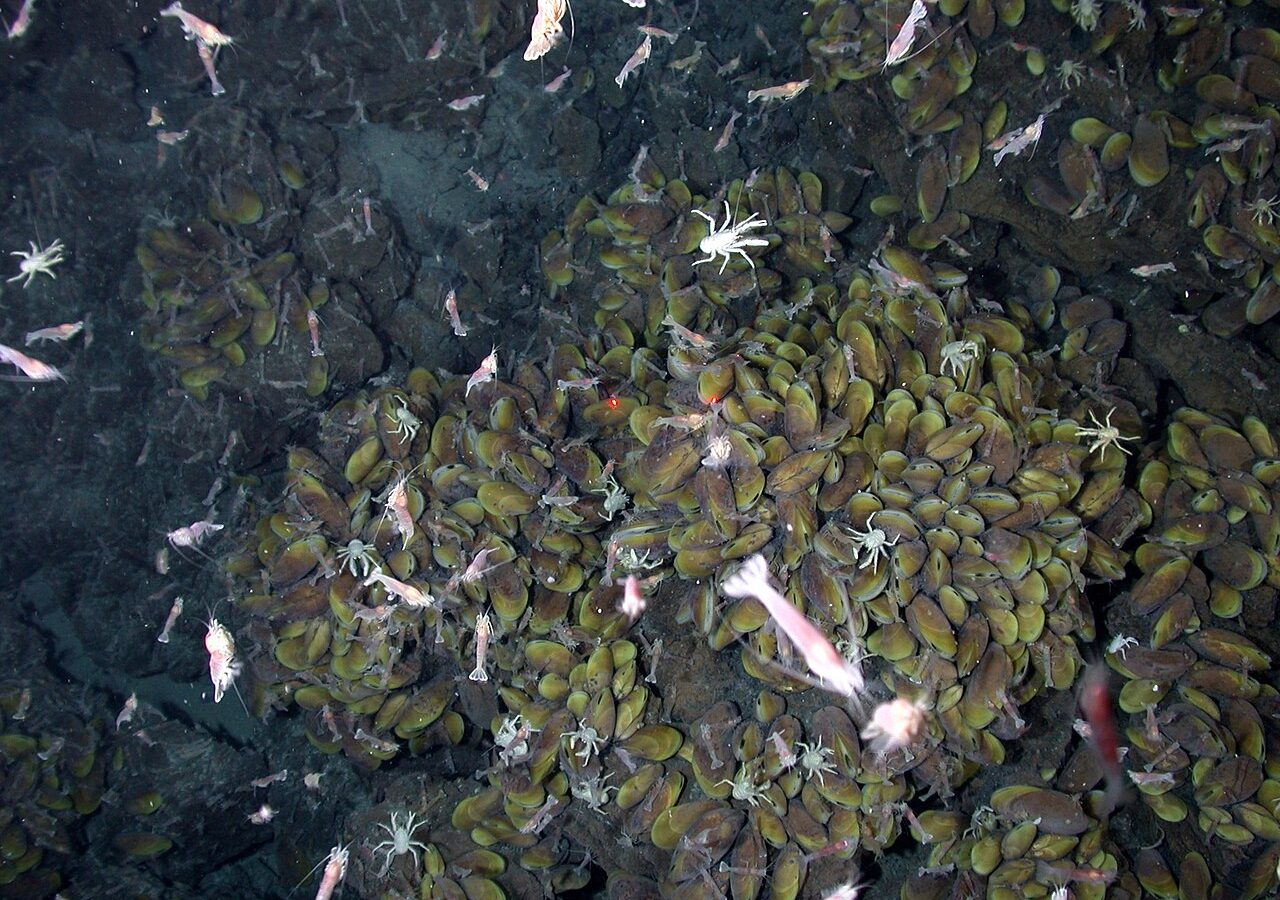
This site sits adjacent to a partially inactive vent structure, giving us a useful comparison to fully active smokers surveyed elsewhere. Fauna density was still remarkably high despite the reduced flow, suggesting residual chemical output is enough to sustain the community for now.
We documented tube worms, vent crabs, and mussel beds in close proximity, with visibly less crowding than fully active sites — likely reflecting a slower, more stable food supply rather than the boom-bust cycle of peak vent activity.
A follow-up visit is planned within two years to track whether the community persists as the structure continues cooling, or whether it shifts toward a different dominant species as conditions change.